ings
ings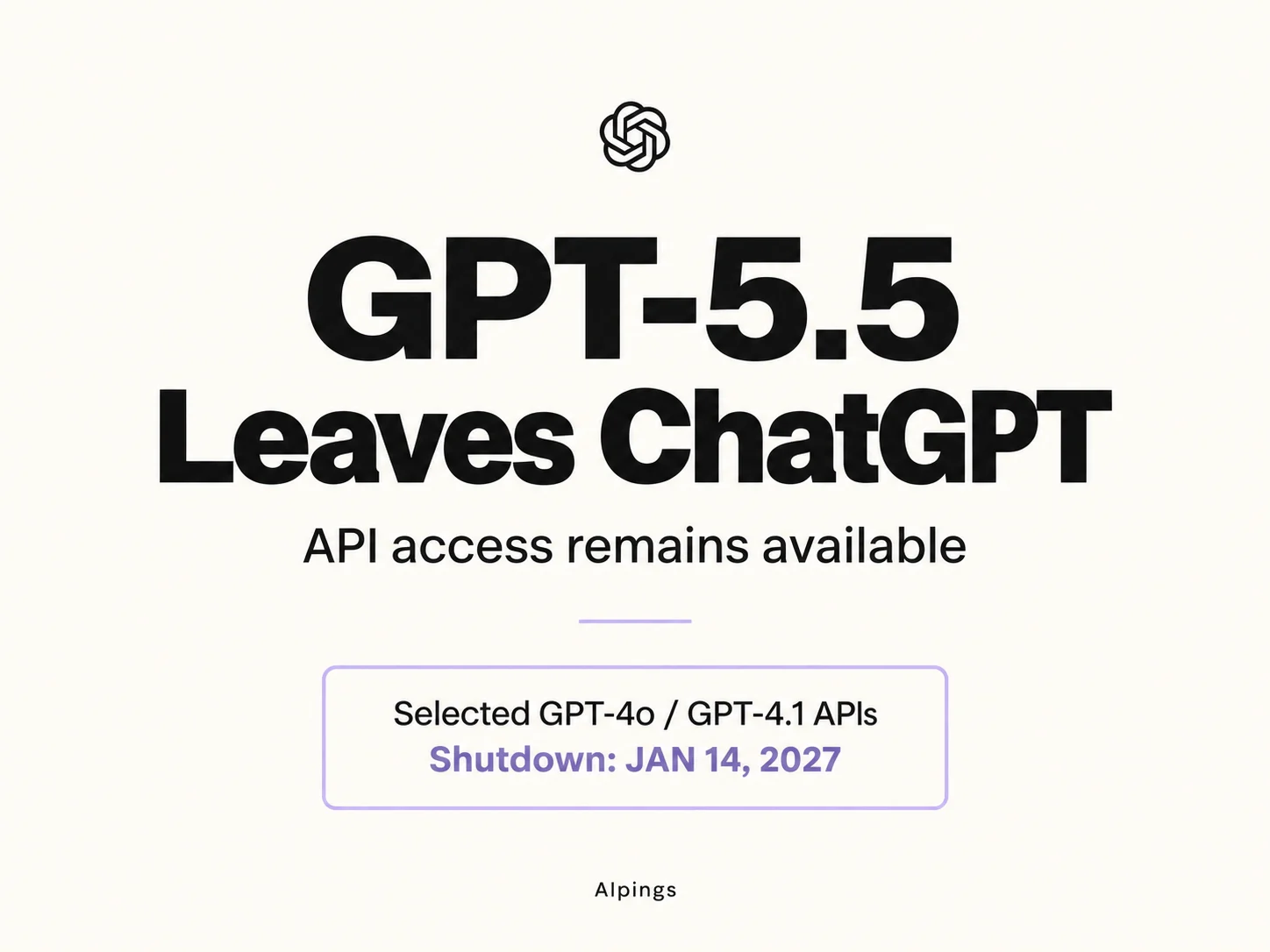
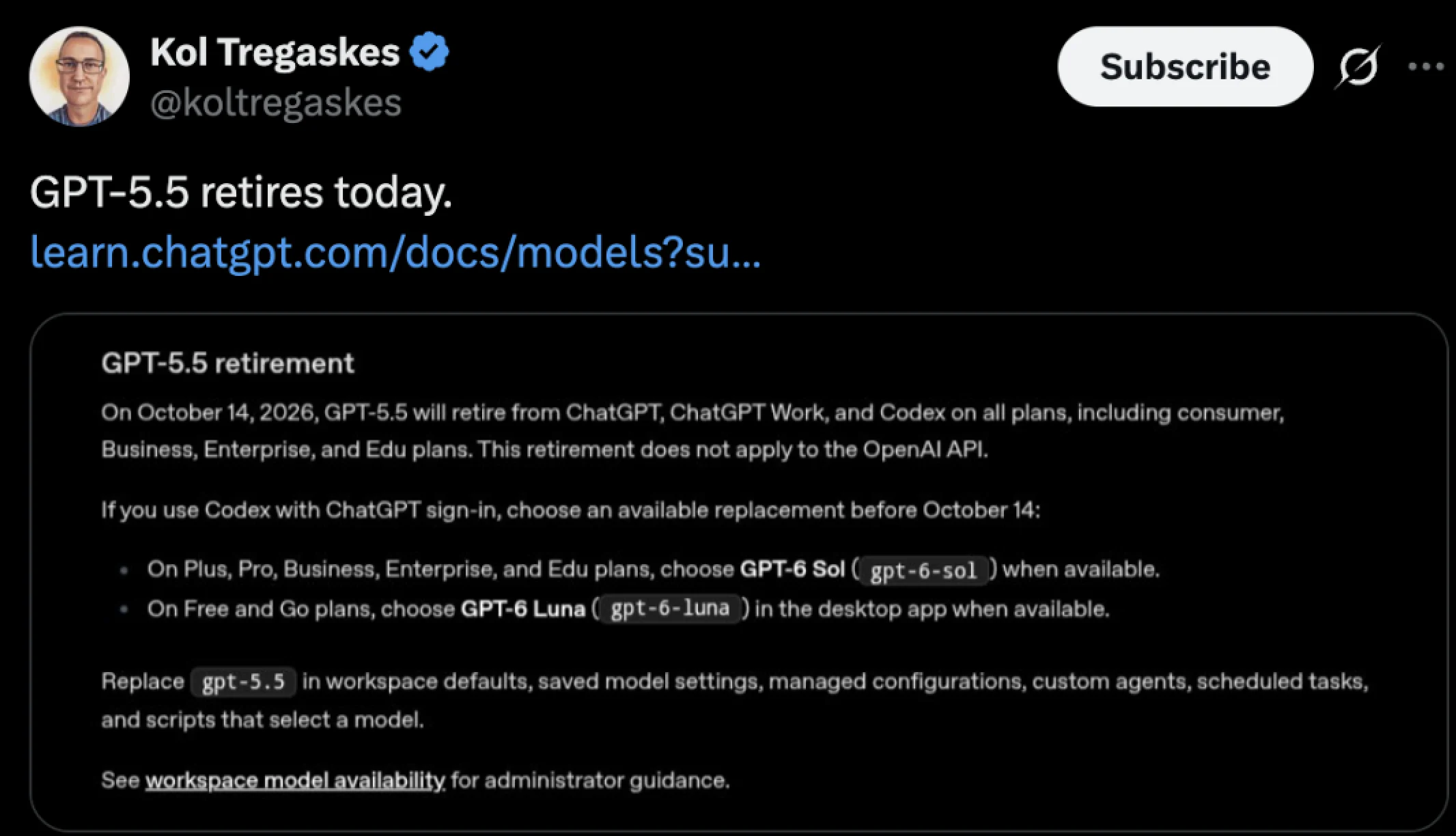
OpenAI is moving ahead with another model transition. According to its official changelog, GPT-5.5 retired from ChatGPT, ChatGPT Work and Codex accessed through ChatGPT sign-in on October 14, 2026. The OpenAI API and Codex sessions authenticated with API keys are unaffected.
Separately, selected GPT-4o, GPT-4o mini, GPT-4.1 and GPT-4.1 mini API versions will shut down on January 14, 2027. Their fine-tuned versions follow the same schedule, according to the API deprecation notice. Subscription users therefore face an immediate transition, while affected API developers have roughly three months to migrate.
New models target speed, accuracy and cost
OpenAI says GPT-6 Instant starts answering web-search questions 44% sooner on average than GPT-5.6 Instant. That measures the wait before an answer begins, rather than the time needed to finish an entire task. Source: GPT-6 announcement
In difficult-prompt testing at low reasoning effort, GPT-6.1 Sol reduced the share of responses containing factual errors from GPT-6 Sol’s 11.4% to 7.7%. OpenAI also claims near-Astra performance on selected tasks at one-fifth of Astra’s standard API input and output token prices. Actual task costs still depend on usage, reasoning effort and retries. Source: GPT-6.1 Sol announcement
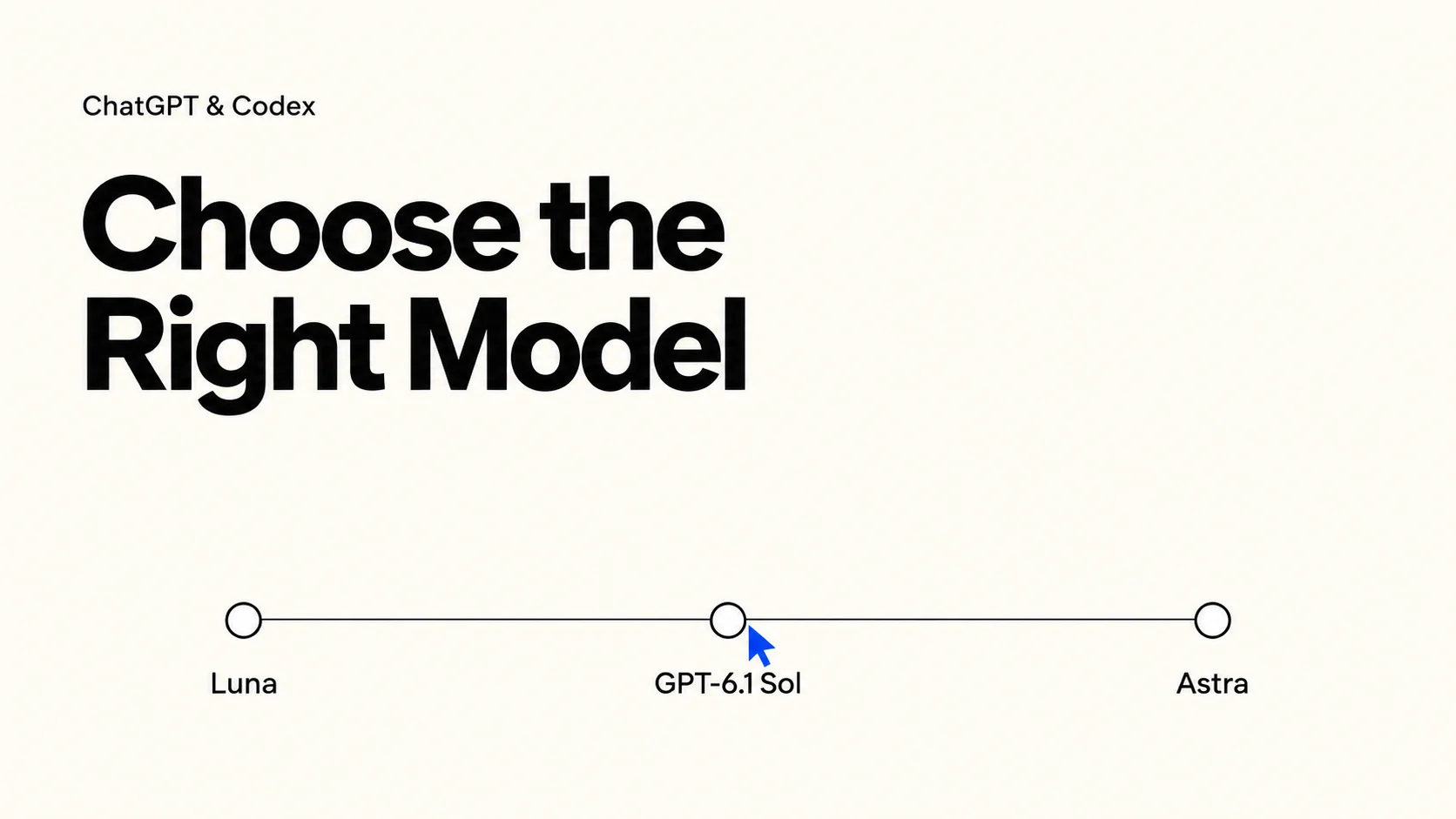
For users comparing the options, GPT-5.5 remains available through the API, while GPT-6.1 Sol focuses on agentic coding, computer use and professional workflows. Sol’s standard API rates are $2 per million input tokens and $10 per million output tokens, compared with Astra’s $10 and $50; this does not establish a saving over GPT-5.5. Sol is available in Work, Codex and the API, but not ordinary Chat. Its Ultrafast mode is now available on Pro $500 and eligible Enterprise and Edu plans. Sources: API pricing, model availability.
Growing demand requires training and serving capacity
OpenAI reported more than 1.2 billion weekly ChatGPT users in its October GPT-6 announcement. More involved research, coding and document workflows can also require more computation per task. Source: GPT-6 announcement
Its previously announced NVIDIA collaboration includes 3GW of dedicated inference capacity and 2GW for training. Those figures describe one partnership, rather than OpenAI’s total compute allocation. The cited announcements do not quantify how much capacity the retirement will release. Source: Scaling AI for everyone
Competition also depends on reliability
Anthropic’s October 7 launch of Haiku 5.5 similarly targets frequent, cost-sensitive tasks, including summaries and classification, alongside supporting larger coding agents. Source: Anthropic
Service reliability remains a separate challenge. OpenAI attributed its September 29 disruption to excessive internal traffic exhausting shared network connections. Anthropic reported an October 7 incident in which some organizations were incorrectly blocked for reaching spending limits. These failures involved infrastructure and account controls, rather than simply insufficient compute. Sources: OpenAI incident review, Claude status history
Migration extends beyond the current conversation
For Codex users signed in with ChatGPT, OpenAI recommends GPT-6.1 Sol on eligible paid plans and GPT-6 Luna in supported desktop apps for Free and Go users, subject to availability. Enterprise and Edu access also depends on administrator settings. GPT-6.1 Sol is available in Work and Codex, rather than ordinary Chat. Source: Official model documentation
Users should also inspect saved defaults, custom agents, scheduled tasks and scripts that still select GPT-5.5. Changing the current conversation does not necessarily update those configurations.
A familiar task provides a practical starting point: compare output quality, completion time and usage before increasing reasoning effort. The useful test of this transition is whether existing work continues smoothly—and whether the replacement reduces waiting and rework.
- OpenAI — API Deprecations ↗
- OpenAI — Models and Migration Guidance ↗
- OpenAI — ChatGPT & Codex Changelog ↗
- OpenAI — GPT-6 and Intelligent UI for Everyone ↗
- OpenAI — Introducing GPT-6.1 Sol ↗
- OpenAI — Scaling AI for Everyone ↗
- Anthropic — Introducing Claude Haiku 5.5 ↗
- OpenAI — September 29 Incident Review ↗
- Anthropic — Claude Status History ↗