
 ings
ings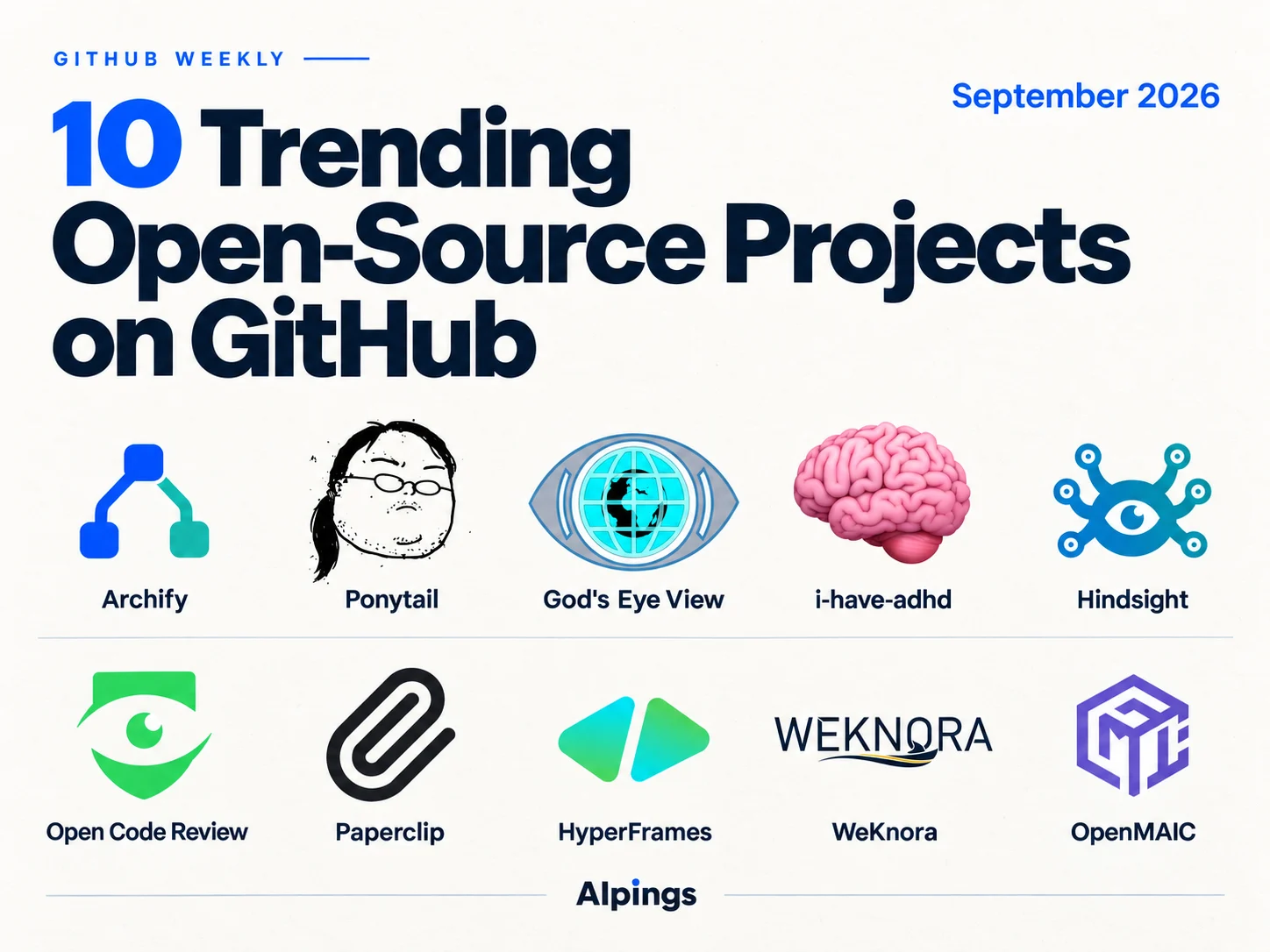

10 Trending Open-Source Projects on GitHub in September 2026
GitHub Weekly · September Roundup
From interactive architecture diagrams to tools for managing AI agents, these ten projects cover a range of practical uses. They are selected from the source roundup and ordered by its reported monthly star gains.
01 · Archify: Turn System Descriptions into Interactive Architecture Diagrams
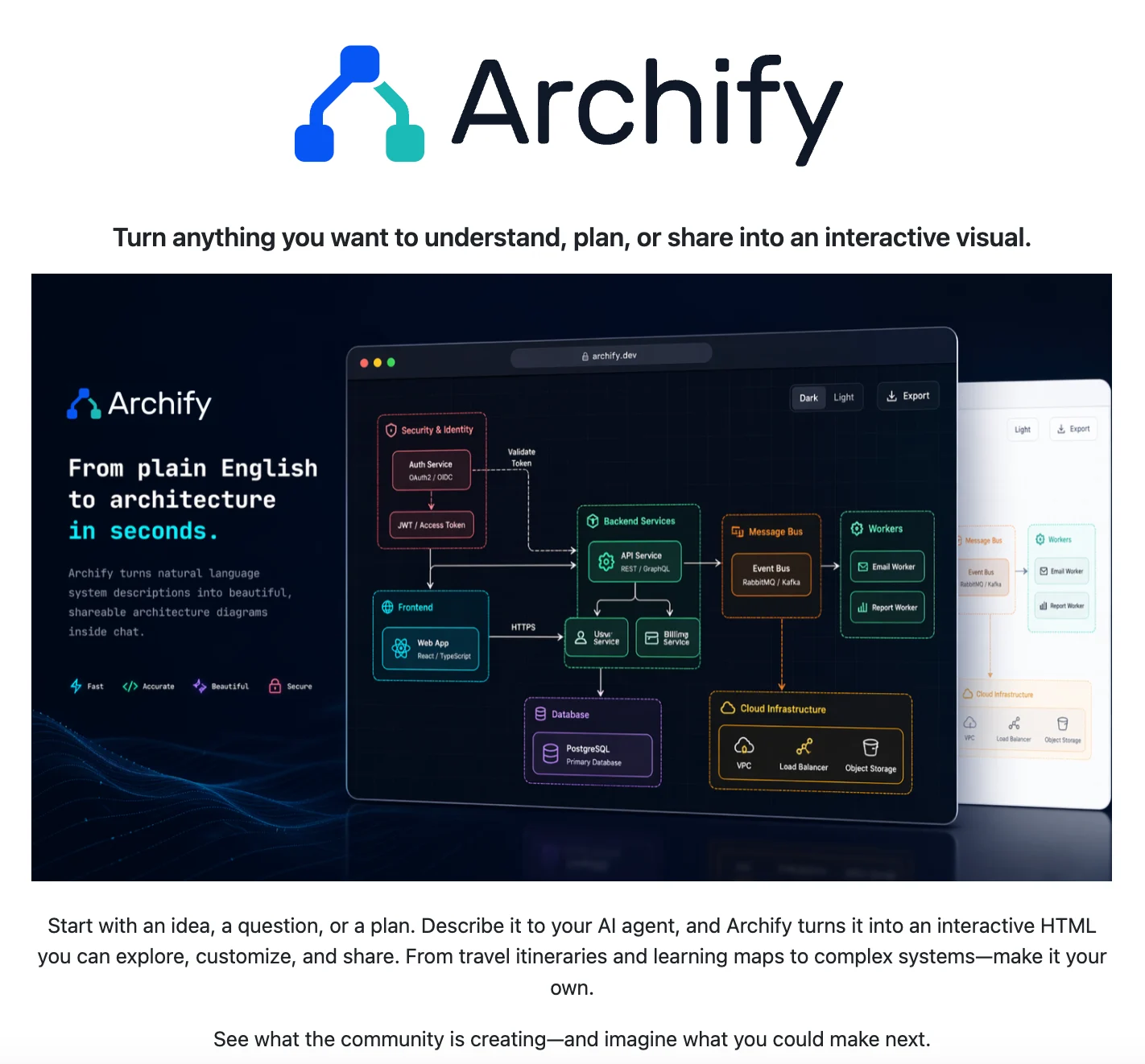
Archify is an agent skill that turns a system description or a code repository into an interactive diagram.
For example, you can ask it to show how a web request travels through an API, a cache, and a database. Once the diagram is generated, you can ask it to highlight the cache-miss path or add authentication steps.
It supports diagrams for architecture, workflows, call sequences, and data flows. The output is a standalone HTML file: colleagues can open it in a browser, click on nodes, view details, and follow individual paths.
You can also export images and share cards for documentation.
This makes it useful for onboarding teammates or discussing architecture changes. The relationships shown still need to be grounded in accurate descriptions and code.
Monthly star gain: approximately 33,400. Explore Archify on GitHub.
02 · Ponytail: Help Coding Agents Write Less Unnecessary Code
Ponytail gives coding agents a decision-making process to follow before implementing something new.
It encourages them to check existing code, standard libraries, and native platform capabilities first, then consider adding a new implementation.
The aim is to reuse available functionality and reduce duplication and overengineering, while retaining necessary security checks and error handling.
Monthly star gain: approximately 31,200. Explore Ponytail on GitHub.
03 · God’s Eye View: Explore a Dynamic 3D Earth in Your Browser
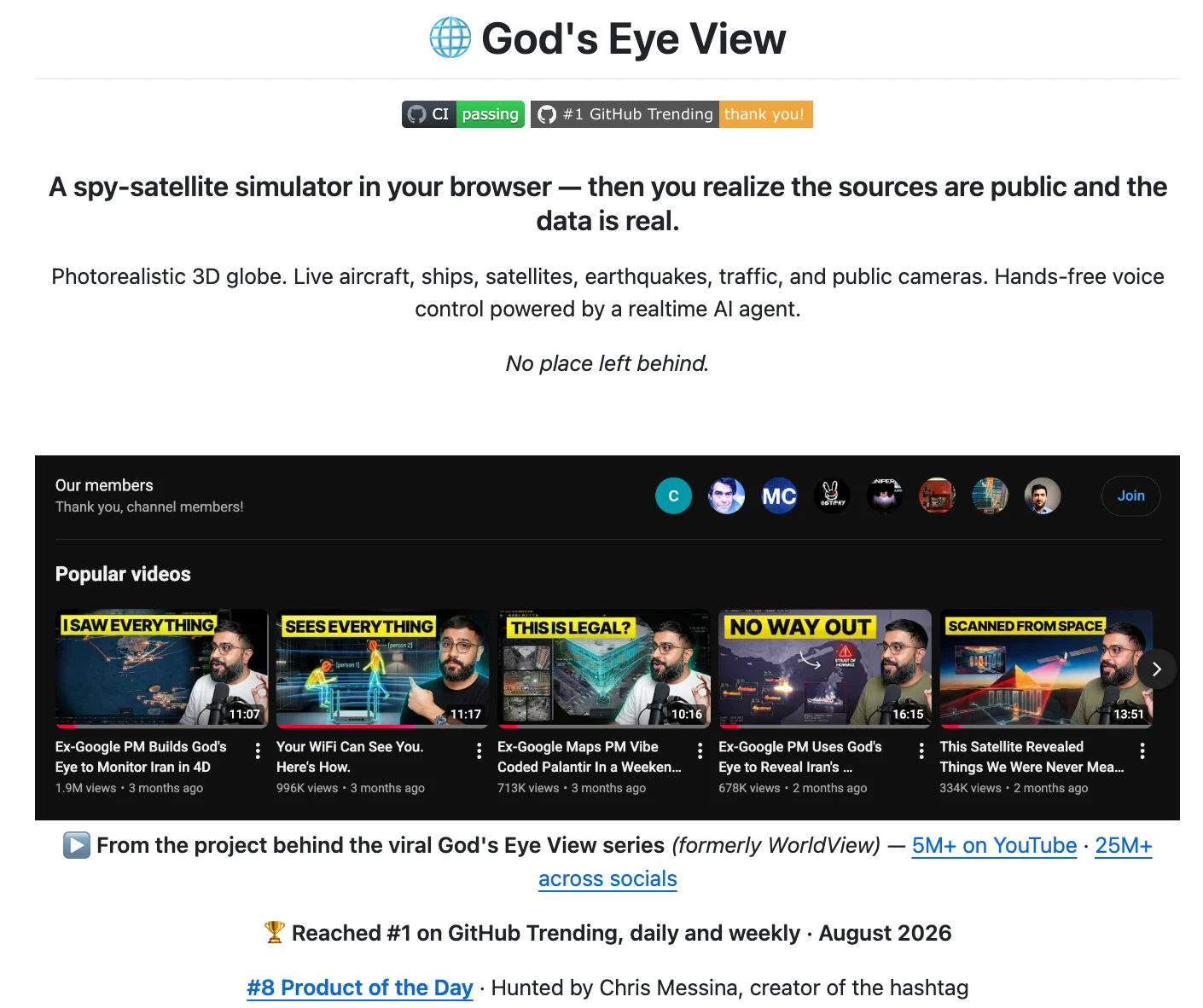
God’s Eye View brings public data about aircraft, ships, satellites, earthquakes, and more into an interactive 3D globe.
The browser interface offers a satellite-like perspective, letting you navigate around the planet and inspect locations and data layers.
For readers interested in geospatial visualization, it offers a striking way to explore how different streams of information can be displayed together.
Monthly star gain: approximately 31,100. Explore God’s Eye View on GitHub.
04 · i-have-adhd: Make AI Responses Start with the Next Action

i-have-adhd guides agents to put the next action first, number the steps in multi-step tasks, and reduce tangents and lengthy introductions.
If you want to quickly see which file to edit or which operation to perform, this set of output rules may be useful.
Its focus is straightforward: make the actionable part of an answer easier to find and follow.
Monthly star gain: approximately 26,500. Explore i-have-adhd on GitHub.
05 · Hindsight: Give AI Agents Long-Term Memory
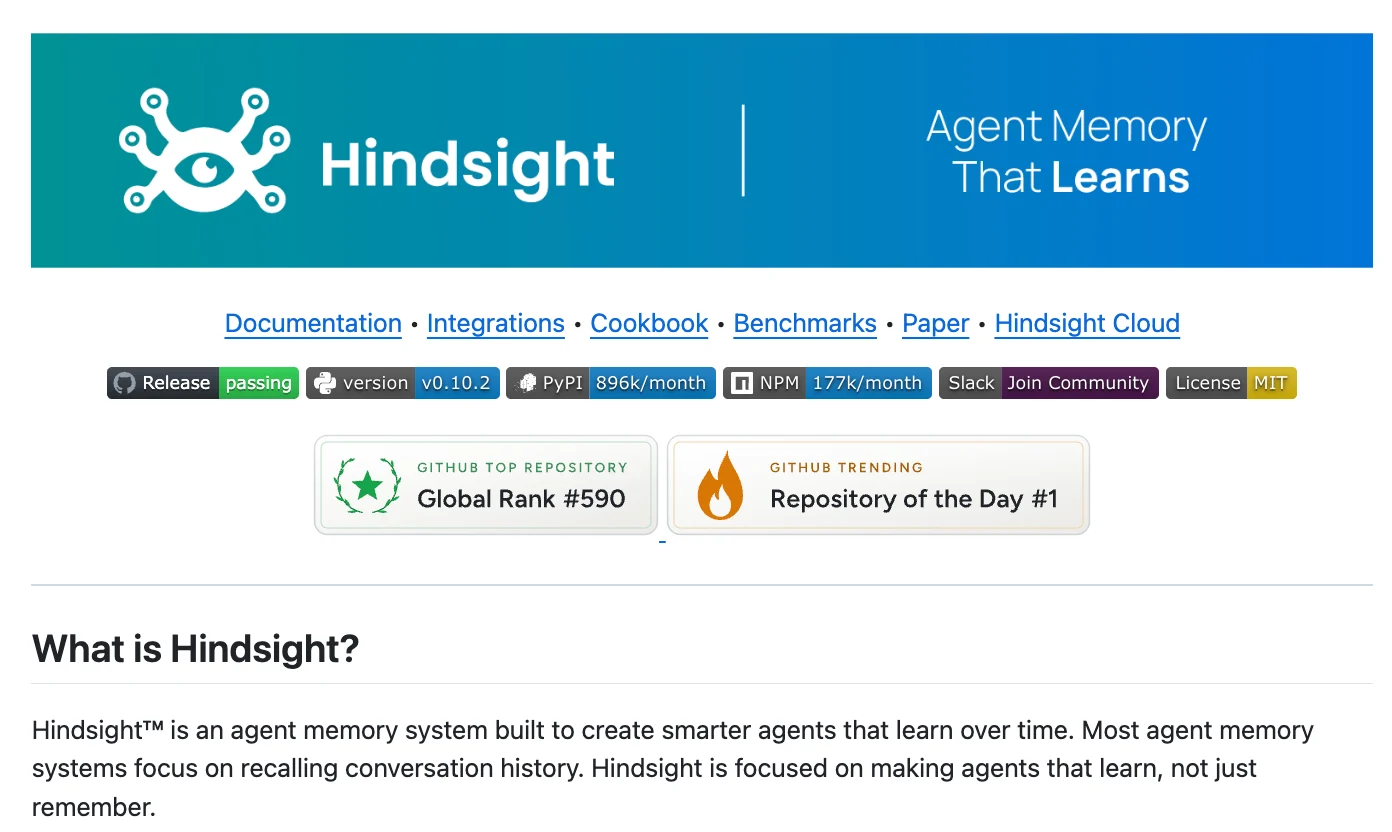
Hindsight lets agents store information, retrieve relevant memories, and reason over accumulated records.
When it stores a conversation, it extracts facts, people, dates, and relationships. Later, it can find relevant memories using meaning, keywords, time, and other contextual signals.
A customer-support agent, for example, could retrieve earlier conversations so users spend less time repeating their background. A project agent could review previous records to identify risks that still need attention.
Developers can create separate memory spaces for individual users or projects and connect them to their applications.
Monthly star gain: approximately 22,800. Explore Hindsight on GitHub.
06 · Open Code Review: AI Code Review with Repository Context
Open Code Review is Alibaba’s open-source tool for reviewing code with an AI agent.
It examines Git changes and produces comments tied to specific lines. The agent can read complete files, search the repository, and inspect related changes to understand the surrounding context.
You can review working changes, individual commits, or differences between branches. It also supports scanning entire files.
Standard use requires configuring a model. A delegation mode lets an existing coding agent perform the review while the tool handles file selection and review rules.
Monthly star gain: approximately 21,800. Explore Open Code Review on GitHub.
07 · Paperclip: Manage Multiple AI Agents in One Place

Paperclip provides a central workspace for coordinating AI agents, assigning tasks, and tracking their work.
It connects tasks to projects and goals, supports different agent tools through adapters, and records usage and costs.
For teams already working with several agents, its practical value is visibility: who is handling each task, how the work is progressing, and how much it costs.
Budget controls and approval workflows help make that coordination more manageable.
Monthly star gain: approximately 16,600. Explore Paperclip on GitHub.
08 · HyperFrames: Turn HTML and Animation into Video
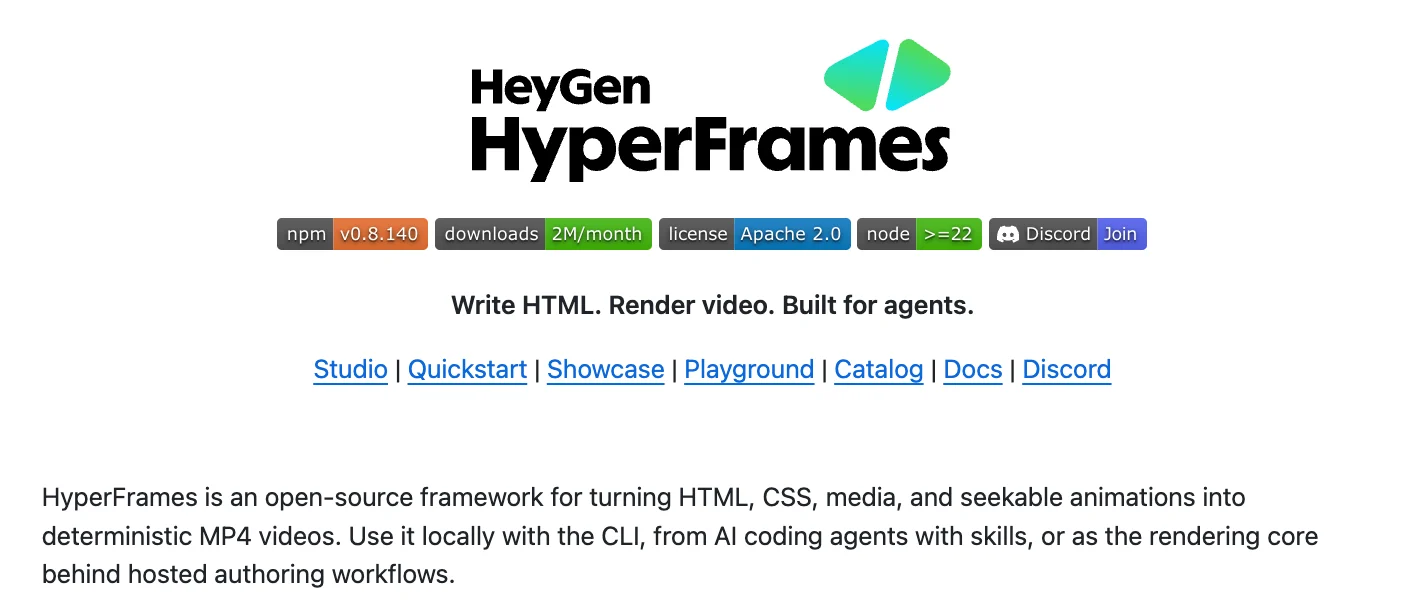
HyperFrames renders HTML, CSS, media, and animations into MP4 videos.
You can use its command-line tools locally or work with an AI coding agent to create a composition, preview it in the browser, and adjust the design and timing.
Potential uses include product announcements, animated captions, data visualizations, and reusable motion graphics.
For developers comfortable with web technologies, it offers a way to build and revise video through code.
Monthly star gain: approximately 12,200. Explore HyperFrames on GitHub.
09 · WeKnora: Turn Team Documents into Searchable Knowledge
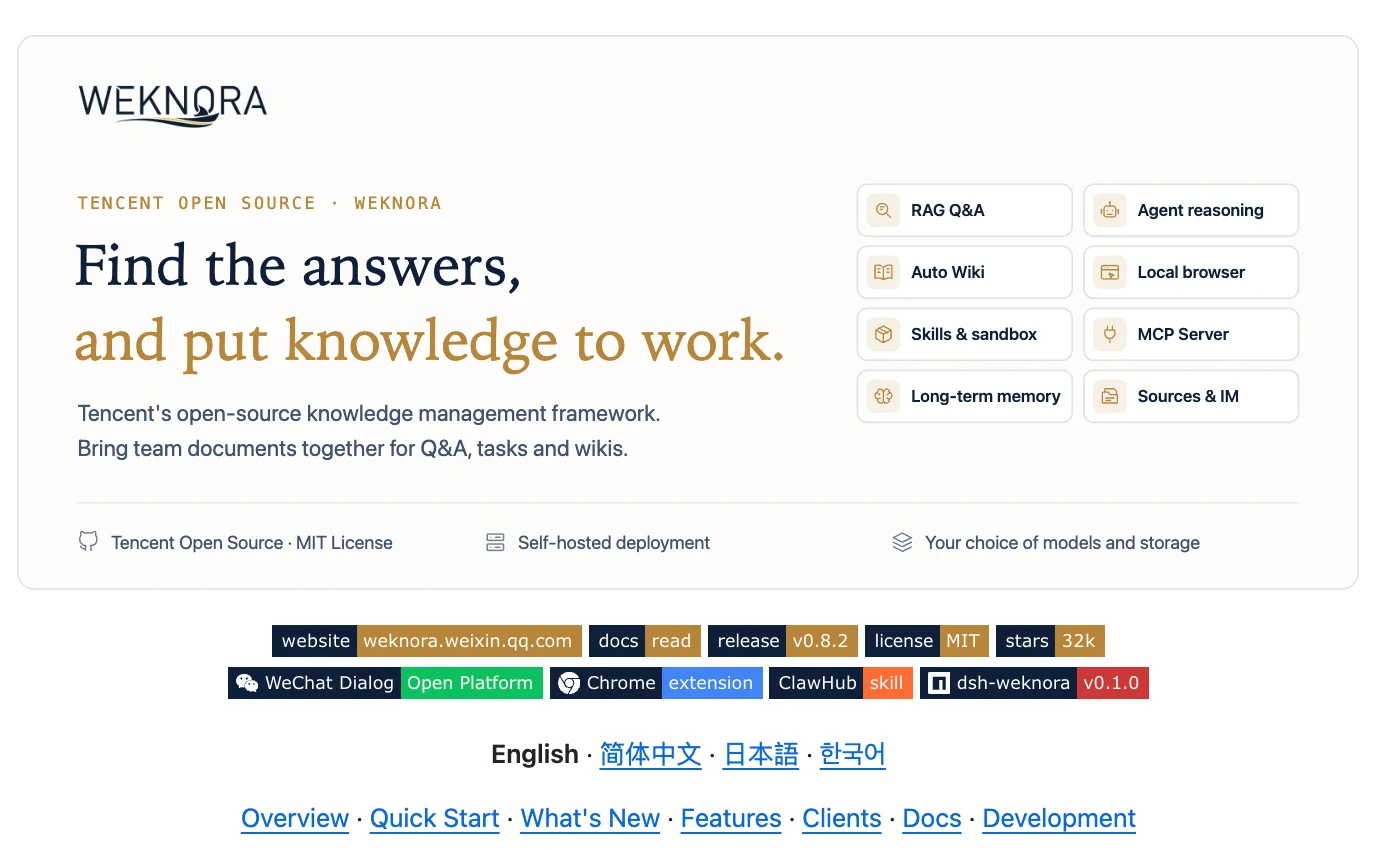
WeKnora is Tencent’s open-source knowledge platform for document understanding, retrieval, and reasoning.
It brings team materials into shared knowledge bases, with three complementary ways to use them: retrieval-based Q&A, agents for multi-step tasks, and a wiki for organizing knowledge.
Answers can include source references, while generated wiki pages can be edited and revised.
It supports local and private-cloud deployment, making it an option for teams that want to maintain searchable knowledge within their own environment.
Monthly star gain: approximately 10,800. Explore WeKnora on GitHub.
10 · OpenMAIC: Generate and Refine Interactive AI Lessons
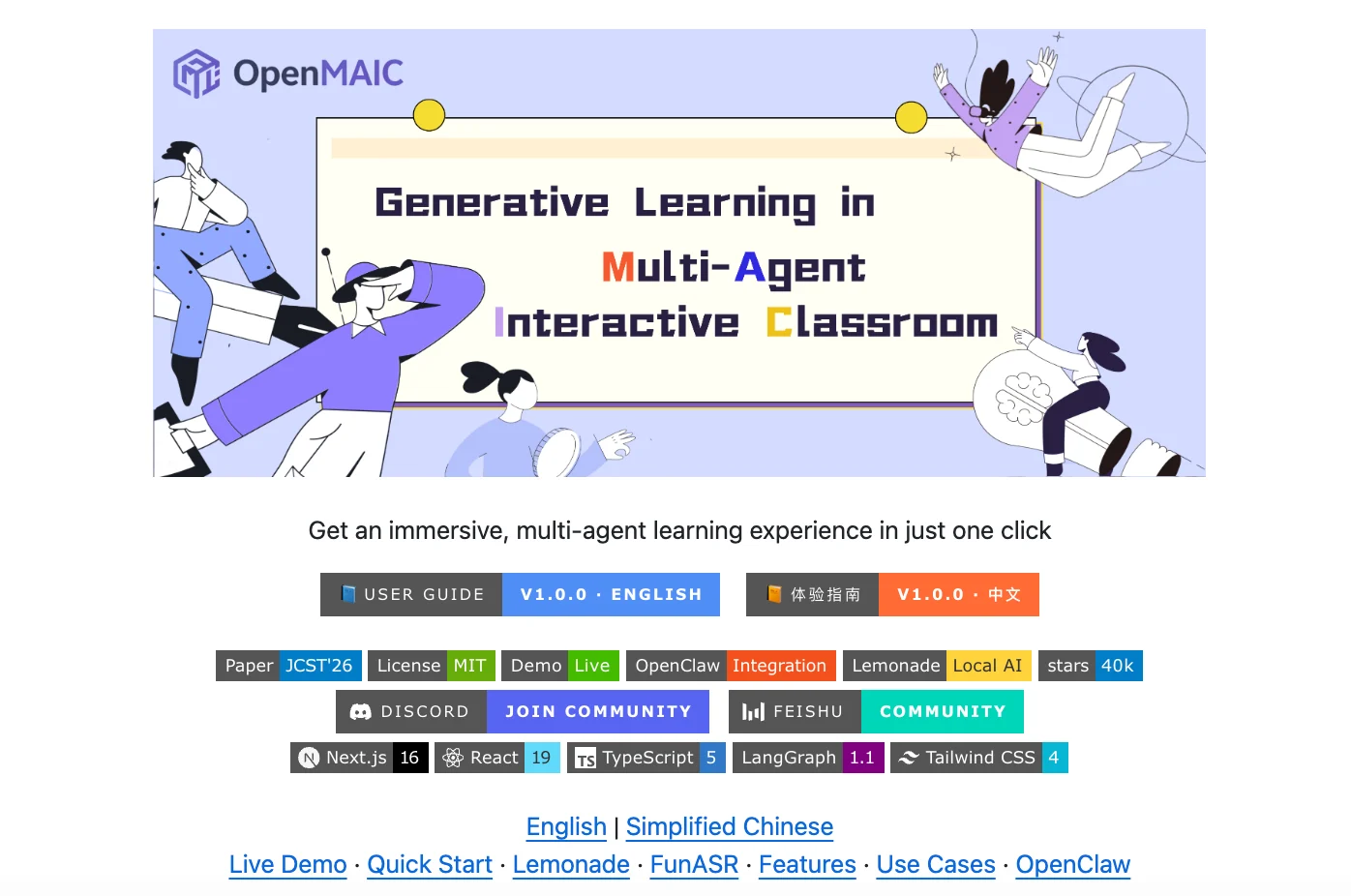
OpenMAIC creates learning experiences from a topic description or uploaded reference materials.
It can generate a lesson outline and turn it into slides, quizzes, interactive experiments, and project-based activities. AI teachers and other agents can participate in explanations and classroom discussions.
Its optional course-building workbench lets you continue refining the material: reorganize pages, change narration, and adjust individual scenes.
For readers exploring AI education, it offers a practical starting point for experimenting with interactive course creation.
Monthly star gain: approximately 9,700. Explore OpenMAIC on GitHub.