Most conversations about AI begin with the tool. Which model should you choose? Which features should you try? How much of your work can you automate?
Those questions matter, but there is an earlier question: What does a good result look like?
Consider a simple assignment: write an announcement for a new product. Without a clear brief, an AI assistant has to guess the audience, the tone, the important details, and the action readers should take. The result might sound polished while missing the point.
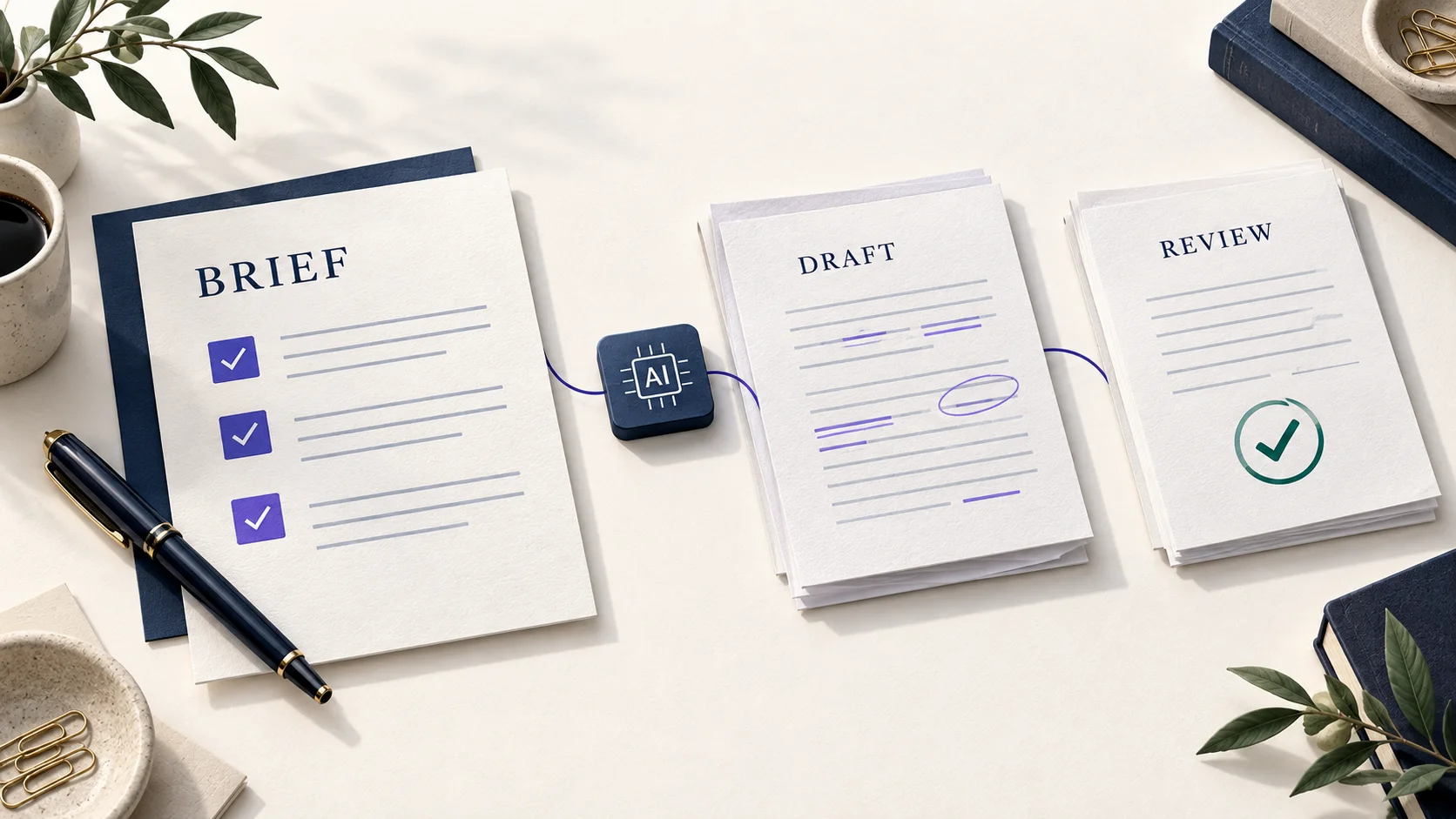
A useful workflow starts by making those decisions explicit.
Start with the outcome
Before writing a prompt, describe the result in one sentence.
“Write something about our product” leaves too much open. A more useful instruction would be:
Write a short launch email for existing customers that explains the new feature and invites them to try it.
This gives the task an audience, a format, and a purpose. You can then add the details that determine whether the result will be useful:
What has changed?
Why should the reader care?
Which facts must appear?
What should the reader do next?
Are there any claims the draft must avoid?
You do not need a long brief. You need enough information to reduce unnecessary guessing.
Separate context from instructions
Background information explains the situation. Instructions explain what to do with it.
For example, your context might include product notes, customer feedback, and an earlier announcement. Your instructions might ask for a 200-word email with a friendly tone and one clear call to action.
Keeping these separate makes the task easier to review. It also helps you notice missing information before it becomes a confident sentence in the draft.
A polished draft is a starting point. It still needs someone to decide whether it is accurate, relevant, and ready to use.
Review in three passes
Instead of asking whether the draft “looks good,” give each review pass a specific job.
Check accuracy. Confirm names, dates, product details, and any factual claims against the material you supplied.
Check usefulness. Does the draft answer the reader’s main question? Is the next action clear?
Check language. Remove repetition, vague promises, and sentences that sound impressive without saying much.
This order matters. There is little value in perfecting a sentence that contains the wrong information.
Keep what works
When a brief produces a useful result, save its structure. The next time you face a similar task, replace the project details and review the instructions.
Keep a short note about what needed correction, too. Perhaps the opening was too long, the tone was too formal, or the draft assumed a feature was available when it was still being tested. Those observations can improve the next brief.
The goal is a process you can understand and repeat. Start with a clear outcome, supply the necessary context, and review the result before using it.