ings
ings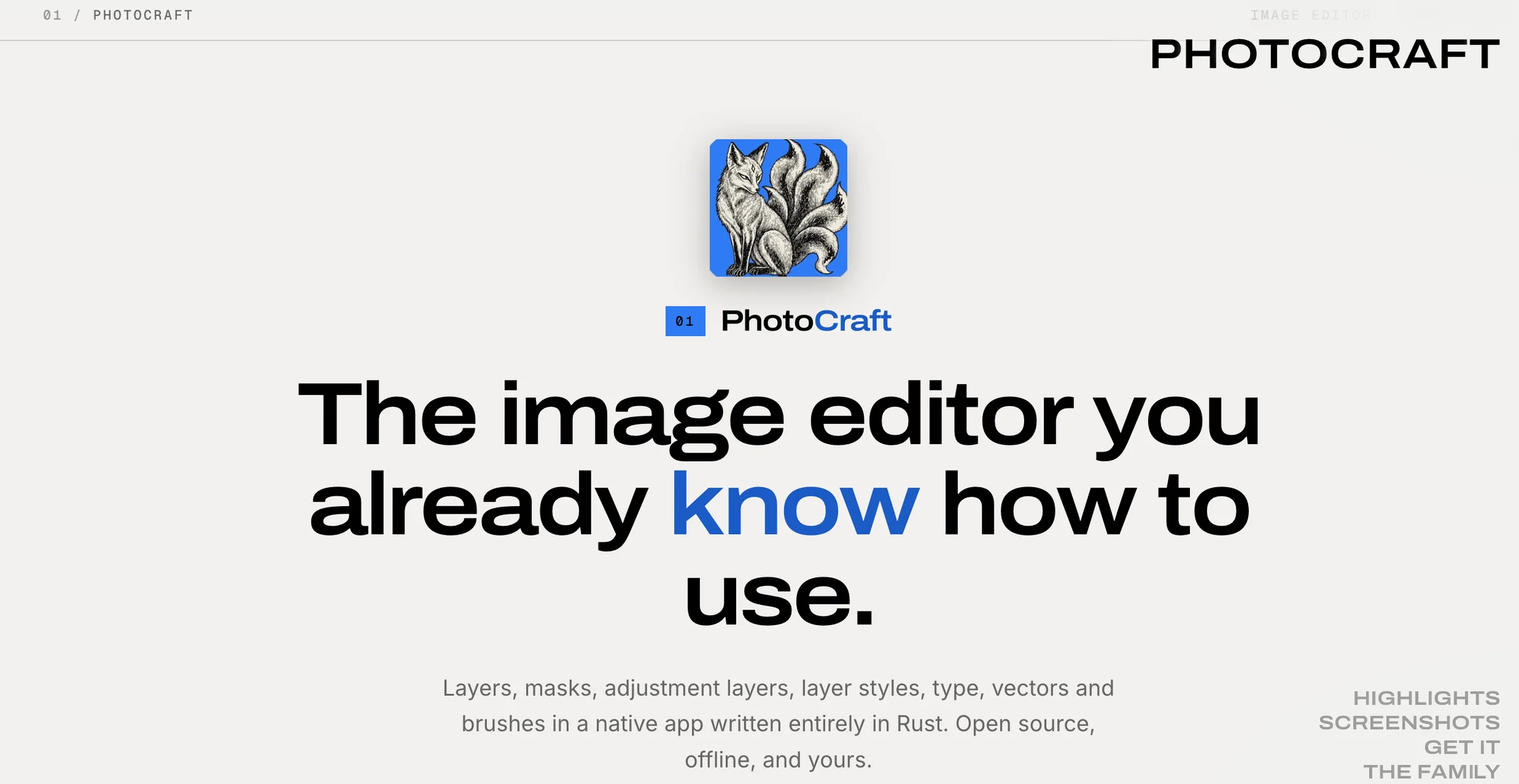
A developer says they have used AI to build open-source alternatives to seven Adobe applications, including Photoshop, Illustrator, and Premiere. The ArtCraft website lists the projects as native Rust applications that are free to use. The developer’s public announcement attributes their development to AI assistance.
PhotoCraft, the Photoshop alternative, supports layers, masks, brushes, text, and reading and writing layered PSD files. Its repository nevertheless describes it as an early alpha, with significant gaps in professional workflows and plug-in compatibility.
Claims that it is already “90% complete” overstate its readiness. In an October 5 assessment, the maintainers estimated real Photoshop parity at well below 50%. They also distinguish between connecting menu items to commands and reproducing Photoshop’s actual behavior.
The project describes its approach as a clean-room implementation based on public specifications and observed behavior. That provides a more grounded account than speculation about decompiling Adobe’s source code or rebuilding its entire suite overnight.
Even at this early stage, the commercial implications deserve attention. A competing tool does not need every feature of an established application to become useful. It needs to handle the tasks a particular group of users cares about. As AI makes implementation cheaper, familiar features may provide less protection against competition.
Software businesses may respond by moving more logic to the server or investing in advantages that accumulate over time: proprietary data, practical expertise, integrations, and dependable workflows. Keeping implementation hidden can make imitation harder, but users still need a compelling reason to stay.
These projects remain far from complete professional replacements. They nevertheless sharpen a question every software business should consider: as functionality becomes easier to reproduce, what will keep users choosing your product?